
Thanks to confinements, online sales have reached record levels. As stores closed, e-commerce sites were able to take advantage of consumers' shopping needs, without any competition from physical retail.
But physical commerce still has its attractions, and has not said its last word. According to a recent study, what shoppers missed most during confinement was being able to "touch and try on" items (45% of those surveyed). Just behind this was the social aspect of shopping with friends or family (35% of those surveyed). Then there's the opportunity to take your purchase home immediately (35%). Many advantages are therefore exclusive to in-store commerce. That's why stores need to innovate and reinvent themselves, in order to adapt to new uses and keep customers coming back for more.
Stores are therefore implementing a wide range of solutions to attract customers. From interactive kiosks to cashless stores, we take a look at these solutions and their advantages and disadvantages.

Staying competitive in the face of e-commerce.
According to a study, two-thirds of French people still prefer to shop in-store. What's more, 38% of those surveyed say they prefer to interact with a salesperson, which is not possible with e-commerce. However, with the younger generations tending to replace physical retailing with digital, it's important for retailers to keep innovating to stay ahead of the game.
In terms of innovation, we can mention connected stores such as the Auchan go located on the Edhec business school campus in Croix. Based on the Amazon go concept, this store offers a unique shopping experience. No need to go to the checkout to pay, just pick up the items you're interested in and walk out of the store... as simple as that!
Well, not quite as simple as that, since you'll need to install a special application on your smartphone beforehand. This is where you fill in your details, particularly your bank details. Once you've done this, the app delivers a QR code that you need to scan at the store entrance, allowing you to enter the store. Thanks to numerous cameras and sensors, the store is able to track the items we pick up. When our shopping is done and we leave the store, the sum of the items in the basket is automatically debited.
Are these stores really a success, or simply showcases to give the illusion of innovation, without really adding value for the consumer?
Well, to answer that question, we need only look at the results achieved by the pioneers of this technology: Amazon.

According to estimates by RBC Capital Markets, these cashier-less mini-markets would welcome 550 visitors a day, with an average basket per visitor of $10. On an annual basis, each Amazon Go store would therefore generate over $1.5 million in sales. For a "classic" convenience store of equivalent size, sales would be $1 million. That's 50% more sales for Amazon stores. On the other hand, these stores are much more expensive to set up. For the hardware alone, the first Amazon Go would have cost $1 million.
We can see that these innovations are appealing to customers, but given the cost of implementing them, we'll have to wait a little longer before seeing them developed en masse.
Crossing channels to attract customers
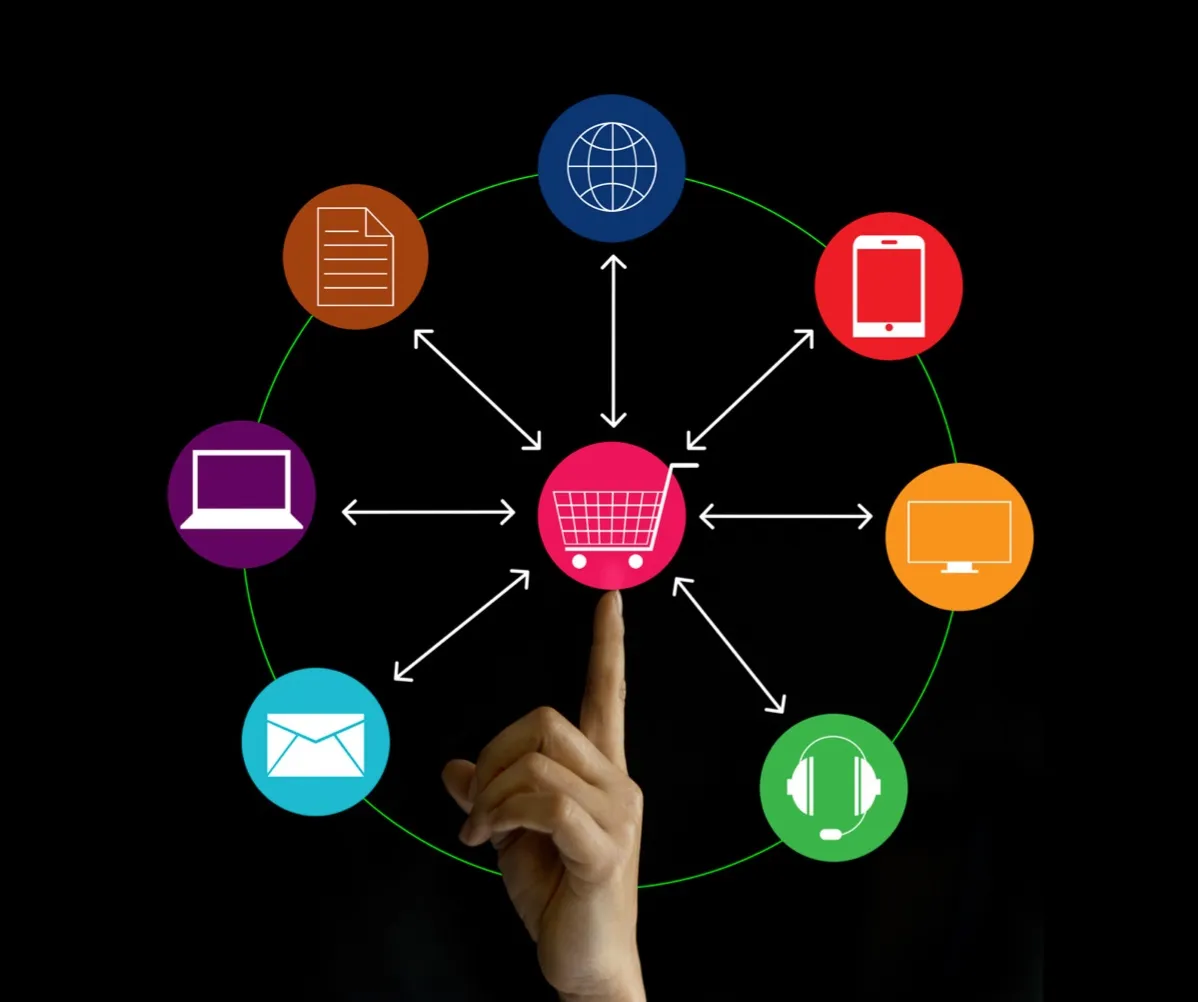
A cross-channel strategy consists of using different channels in a complementary way during the purchasing process. Today's customers use these different channels to make the best choice of products, communicate with companies, compare offers, etc.
These different channels include point of sale, mobile, e-mailing, social networks, etc. Throughout thecustomer journey, they will converge between these different channels to create a fluid, seamless experience. One example is click and collect. A customer receives a promotional offer he is interested in during an e-mailing campaign. They visit the brand's website and reserve their item. Once the item is available in store, the customer receives a text message and can collect it from the store. So there are four channels involved here (e-mail, website, text message, store).

According to some estimates, click&collect can increase the average shopping basket by 45%! In fact, the fact of visiting the store encourages customers to stroll through the aisles. This allows them to make purchases they've fallen in love with, in addition to those already made with the click&collect order. This cross-channel strategy is well suited to the way consumers shop today.
In fact, in 2021, 48.5 million French people made at least one online purchase, representing 90% of all Internet users! In fact, online sales rose by 11.6% over 2019 to reach a total of over 100 billion euros in sales! A significant figure that testifies to the great interest in e-commerce sites. Still on the subject of cross-channel strategies, 67% of digital consumers made their purchases via their smartphone. This statistic demonstrates the importance for brands to diversify across different channels, so as to be available at all times and according to customers' desires.
How do interactive terminals work?
Interactive kiosks are in-store devices that enable an exchange of information between the store and its customers. They offer a wide range of functions to customers, such as :
- Consult the full range of products distributed by the brand, even those not available at the point of sale.
- Know the price and availability of a particular item.
- Give the customer the information he wants.
Thanks to their many functions and their ability to be customized for each individual outlet, these kiosks are gaining in popularity with retailers.

But that's not to say that these kiosks are the unanimous choice of customers. Indeed, as can be seen in large shopping malls, kiosks that only provide access to information are not necessarily widely used by consumers. To be a real tool during the customer journey, these kiosks need to add value.
To keep customers coming back to the store, they need to have a pleasant experience. These kiosks, if used wisely, can contribute to this experience. To do so, they need to meet the customer's real needs.
One of their most interesting uses is to alleviate inventory problems . In-store space is one of the biggest concerns for retailers. It can be difficult to know which products to keep in the store, for example, bulky products (furniture, garden furniture, bedding, etc.) or products with many possible variations (shoes, etc.). Thanks to the kiosks, a customer who comes to the store without finding the reference he came for does not leave empty-handed, and has therefore wasted his time, but can order directly in-store and have the reference delivered to his home by the warehouse holding it. The customer still benefits from the in-store experience.
How can voice be combined with connected stores?
Connected stores are the result of a constant need for innovation on the part of retailers. And Voice commerce is just such a promising innovation!
With projected sales of over 40 billion by 2022, voice commerce is a high-potential and highly attractive market. Voice assistants are being used more and more, with 20 million users in France alone!
But how can voice be combined with connected stores?
Well, instead of guiding customers visually via kiosks, why not guide them audibly? To find out more about a product in the store, QR codes could be added to tablets. Once scanned, these QR codes could lead to voice prompts. These could be either descriptive about the product, or oriented around the brand's image for storytelling purposes.
Reviews, too, can benefit from audio! Instead of reading impersonal written reviews that lack authenticity, retailers could give their customers a voice to recount their experience, with all the emotion and spontaneity that goes with it. This reassures customers and makes them feel closer to the brand and the product.