
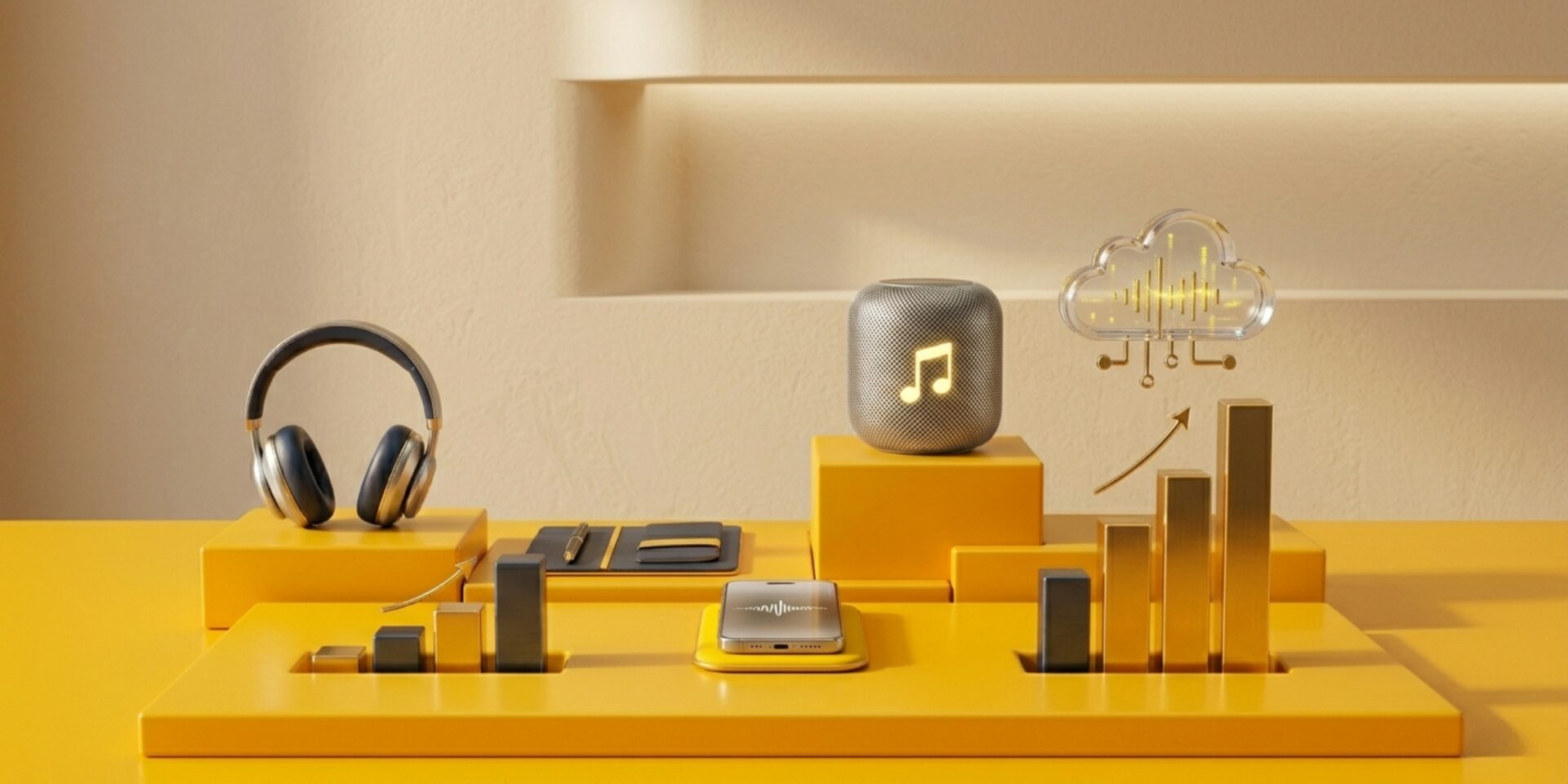
For a long time, audio was the neglected stepchild of digital strategies. It was a format that was almost an afterthought, something we turned to only after text, images, and video. The 2026 audio statistics tell a different story: voice has become central to our daily lives, and faster than we ever imagined.
The voicemail message, the first sign of change

The most telling sign comes from messaging apps. On WhatsApp, more than 7 billion voice messages are sent every day around the world. That figure is worth pausing to consider: even though they could write everything out, billions of people choose to speak every day.
The reason is simple: the voice allows us to convey what text cannot. As the app itself points out, conveying emotion or enthusiasm comes across more naturally through the voice than through text. That’s exactly what brands are looking for—a nuance, a tone, a warmth that written text tends to lose. (Source: TechCrunch)
In France, this habit is deeply ingrained, especially among young people. According to Médiamétrie, a significant portion of 16- to 30-year-olds send or receive more than ten voice memos a day. And for good reason: nearly four out of ten users choose audio specifically to say things that are difficult to put into writing. Voice isn’t just a convenient shortcut; it’s a way to express what text can’t describe.
Also, here’s one last detail worth knowing: the ideal length for a voice message is around 41 seconds. Long enough to cover the essentials, yet short enough to keep listeners engaged. This is something any brand looking to get into audio should keep in mind.

Search is going voice-enabled, too
Another major change is the way we search for information. In France, a large majority of internet users now use voice search. In practice, speaking out loud instead of typing is no longer unusual; it has become a common habit.
Globally, we often read that one in every two online searches is conducted via a voice assistant. This figure should be taken with a grain of salt; it has been circulating for years without a truly reliable source. Nevertheless, regardless of the exact number, the trend is clear: voice search is on the rise. Consequently, for brands, this brings about tangible changes. Content designed solely to be read becomes invisible to a portion of voice searches.
Listening has gone digital
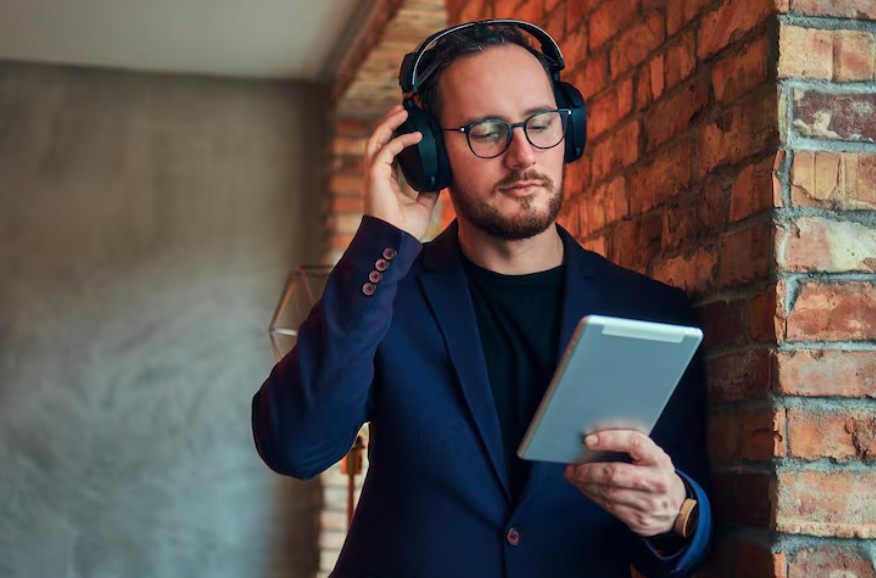
This is undoubtedly the most profound change, and it is well documented. According to the study Médiamétrie’s “L’Année Audio 2024-2025” by Médiamétrie, 59% of time spent listening to audio is now on digital platforms, up 11% over two years. In other words, the majority of our listening has shifted from traditional radio and landline devices to digital platforms.
The driving force behind this shift is the smartphone. Indeed, on-demand services, streaming, and podcasts—combined with the growing use of mobile phones—are fueling this digital growth. The phone we always carry with us has now become our primary listening device.
What’s more, this is part of a widespread trend. More than eight in ten French people listen to audio every day, and 96% do so at least once a month. That amounts to 42 million people every day. Among younger people, it has become second nature. In fact, 85% of those under 25 listen to audio every day.
That said, it’s important to note that while listening habits are becoming more digital, radio remains by far the leading audio medium for the French. It still accounts for 54% of daily listening time. Digital media isn’t replacing radio; it’s simply complementing it. This is a point worth clarifying, as people are a bit too quick to declare the death of radio.
source: Médiamétrie
What these 2026 audio figures tell us
Taken together, they tell the same story: voice has become a central channel for communication, searching, and gathering information. These are no longer emerging trends, but rather established, measurable practices that are now the norm in several respects.
Yet an interesting disconnect remains. The public, for its part, has already embraced audio as part of daily life. Brands, on the other hand—though not all of them—often lag behind, less out of a lack of interest than a lack of guidance on how to proceed. This is precisely where the real opportunity lies: not in trying to catch up with a missed opportunity, but rather in securing a place at the table just as the public is already there.
As you may have noticed, the public has already embraced audio, and the opportunity is there. To learn how to capitalize on this in practical terms, EKOO has compiled everything you need to know aboutaudio in 2026 in its white paper, from key statistics to the latest innovations.