
When voice transforms the digital customer experience.
In an increasingly connected world, our lifestyles are changing and our consumer habits are evolving.
E-commerce is a perfect illustration of this phenomenon: according to Textemasterthere will be over 28 million e-commerce sites worldwide by 2025. French e-commerce, for its part, will have grown by 9.6% by 2023. This impressive growth makes the market even more competitive, and drives brands to innovate by finding new ways to differentiate themselves.
Faced with such a multitude of offers, Internet users can feel lost, drowning in an abundance of options and information. Where should they look? How to compare?
Against this backdrop, audio, which is already firmly rooted in our daily lives, is reinventing itself and gradually establishing itself as a new way of innovating the shopping experience.
Audio, an asset that makes all the difference

A quick and easy format: perfect for making your product sheets shine.
Unlike video, audio is an obvious time-saver. It's quicker to produce and easier to integrate into product sheets.
It offers web users the possibility of continuing their purchasing journey in complete fluidity, since they can listen to the audio without having to remain fixed on a particular page, or mobilize all their visual attention.
In addition to being quick and easy, audio is more attention-grabbing than text alone.
According to a study conducted by Vitec Visiolinkfor the same content, users who listen to it spend an average of 7.9 times more time on it than those who read it. In other words, audio captures and holds attention for much longer than written text, which requires more concentration and is more likely to lose interest.
Audio, a tool for explaining complex products and creating engagement
Audio is particularly useful for explaining a complex service or product. It enables a salesperson who is an expert in the field to present it in a clear and accessible way. They can convey their expertise as if they were in the store.
This virtual proximity facilitates understanding and offers more human customer support.
Some brands exploit this dimension by entrusting an expert with the narration of a technical or sophisticated product; this is the case with Groupama, which uses EKOO audio capsules to explain how to declare a claim, an often tedious and complex process.
A simple tool to enhance the user experience
Capturing attention in a saturated e-commerce environment
Product sheets often contain a lot of information, which can scatter or even lose visitors' attention. This is where audio can be particularly effective.
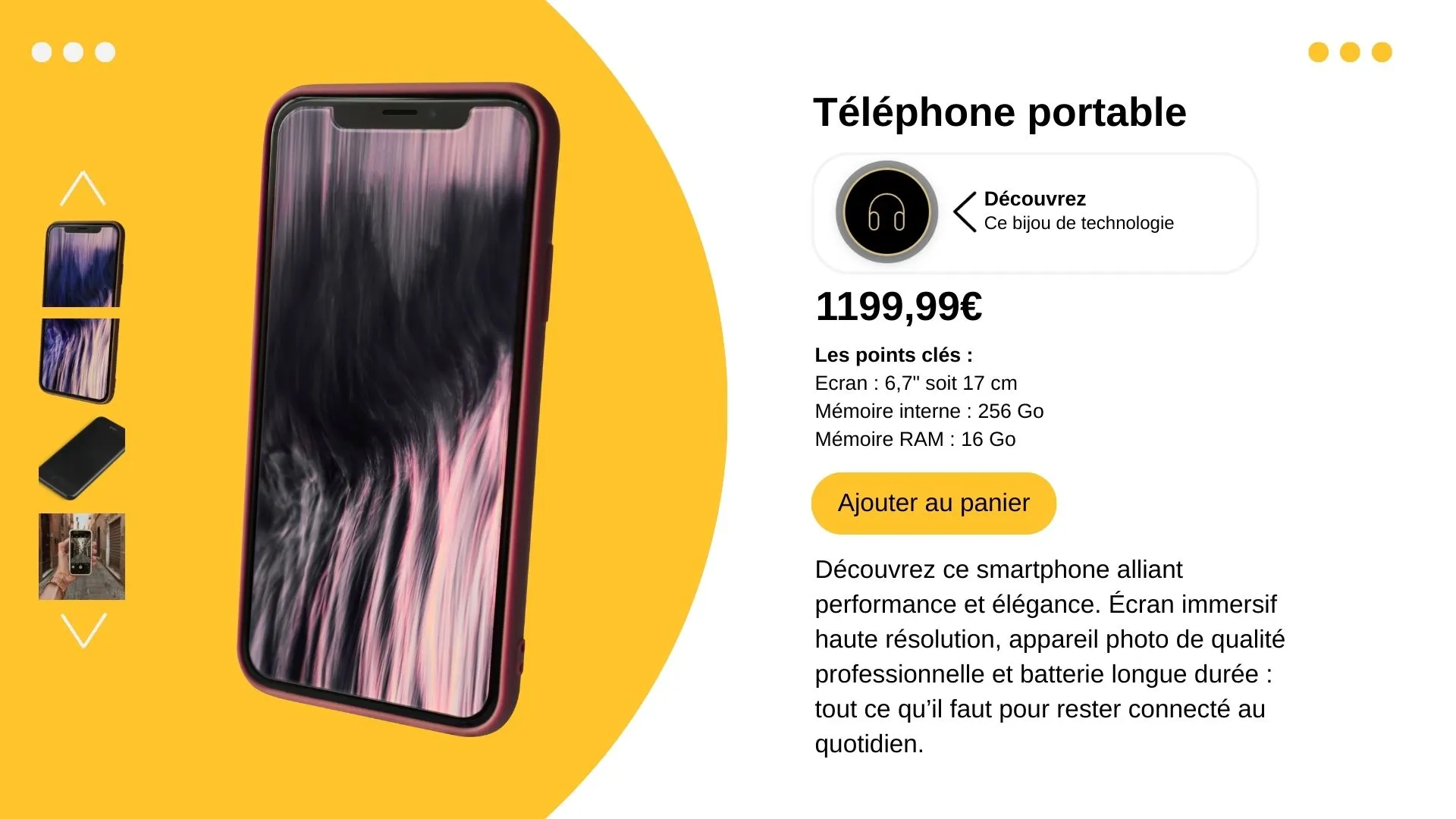
Audio capsules capture users' attention from the very first seconds. They bring together key information to help customers understand products quickly and simply, as if they were accompanied by an in-store consultant.
Caviar brand Petrossian has integrated audio capsules on its website to provide more information about its products, their provenance and history. Out of 2,523 audio clips played, 68% were listened to right to the end. Proof that audio can hold attention.
For certain sectors, such as food, it's often difficult to buy a product on an e-commerce site without having tasted it first. Audio allows customers to project themselves and better understand the manufacture and characteristics of the products they are viewing.
Audio on product sheets: a lever for engagement

Measurable, sustainable performance
Beyond the user experience, audio can also be an evolutionary lever for online performance.
By integrating sound bites into product sheets, visitors spend more time on the page, scroll more - around +50% - and explore other brand content more easily .
The customer then spends more time on the page and is more likely to discover other products and add them to the shopping cart. These behaviors are signals of engagement that are highly valued by search engines, which can help improve natural search engine optimization (SEO).
Wine marketplace Le Petit Ballon has added an audio capsule to its beer subscription, explaining in a light-hearted, educational way how it works. Since adding this new feature, the company has seen an increase of over 50% in people scrolling to other pages, and a significant drop in the bounce rate. According to SEMrush, a page's bounce rate is best between 26% and 40%. These results suggest that voice, by making the experience more immersive, can boost not only engagement but also the overall performance of an e-commerce site.
If you'd like to find out more about the figures that represent the impact of audio, take a look at our article on the key figures for audio in 2025: record-breaking trends.
Conclusion: the future of e-commerce lies in audio

At a time when e-commerce is becoming increasingly competitive, every detail counts to stand out from the crowd. Integrating audio on product data sheets is no longer just a fad, but a real strategic asset for brands.
Simple to produce, quick to set up and perfectly adapted to new digital uses, it provides clarity, proximity and commitment.
Beyond the user experience, audio helps sites perform better. Visitors stay longer on pages and discover more products, which has an impact on SEO.
In a complex online market, audio seems to be an innovative response to new consumer habits.