

Voice cloning, long the preserve of science fiction, is now a technological reality that is transforming audio. Thanks to artificial intelligence and advances in voice synthesis, it is now possible to reproduce a human voice with stunning fidelity. A revolution for audio creation, podcasts, dubbing and voice assistants, which are becoming more realistic than ever.
Voice cloning has already enabled companies to produce audio books in record time,(Librinova) to translate videos while retaining the speaker's original voice, or to create voice assistants in the image of their spokespeople. For brands, it's an opportunity to personalize audio messages on a large scale, such as sending an order confirmation in the same voice as in their ad, or offering immersive experiences in podcasts or interactive events.
The market is exploding: ElevenLabs, one of the hottest AI voice cloning start-ups, could soon be valued at $3 billion, barely two years after its creation.(Source)
But this innovation also raises major ethical issues: how can we guarantee the authenticity of the voices generated by AI? What are the risks to privacy and misinformation? To avoid abuses, it is essential to provide a framework for its use, notably through verification and voice data protection mechanisms.
In this article, we explore the concrete applications of this technology and how it is revolutionizing the world of audio.
What exactly is voice cloning?
A simple definition
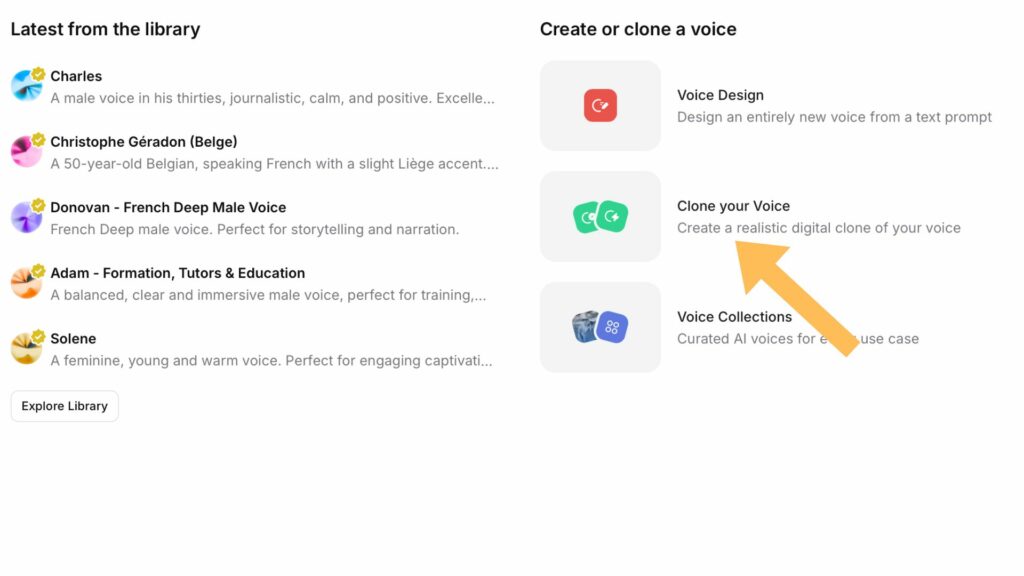
Voice cloning refers to the ability to digitally reproduce an existing human voice usingartificial intelligence technologies. In concrete terms, this means creating a synthetic voice that perfectly imitates the timbre, intonation, rhythm and emotions of a real person, from a few minutes (sometimes a few seconds) of audio recording.
It's a revolution in the world of audio: where previously voice was difficult to reproduce faithfully, it now becomes duplicable content, like an image or a video.
How does it work technically?
Voice cloning relies first and foremost on advancedartificial intelligence techniques, and more specifically deep learning. Here are the main steps in the process:
- Voice data collection: the voice of the person to be cloned must be recorded. The richer the audio database (tone, emotions, speed), the more accurate the model.
- AI model training: the algorithms analyze the unique characteristics of the voice (accent, flow, tone, pauses, etc.).
- Voice modeling: AI builds a model that mimics the acoustic behavior of the original voice. It learns to "speak" like the person, based on written text.
- Voice generation: from any script, the AI can then produce original audio with the cloned voice, adapting the intonations according to the context or the desired emotion.
Thanks to this technology, it is now possible to make a voice speak that has never uttered the recorded words, with a naturalness that is sometimes astonishing... And with major implications for audio creation, narration and accessibility.

Numerous concrete applications for voice cloning in various sectors
Artificial intelligence (AI) voice cloning now has a wide range of strategic uses in a number of key sectors. Here's an overview of the main real-world applications of voice cloning.
Cloning in media and entertainment
Voice cloning is a game-changer for audio content production. It enables videos to be automatically dubbed without the need for new recordings, while retaining the emotion and style of the original voice. A powerful tool for multilingual revoicing, it enables the sound identity of a voice to be preserved, even in multiple languages.
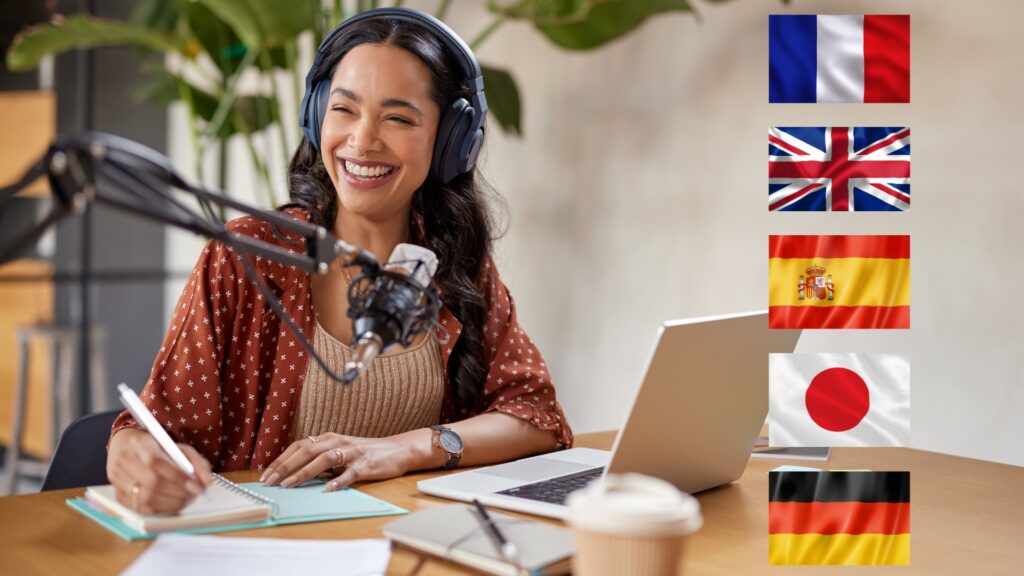
On the creative side, podcasts and audiobooks benefit from fast-generating, studio-quality narration. The result: content that's faster to produce, more accessible and consistent across all channels.
Voice cloning for accessibility and inclusion
But beyond innovation, voice cloning has a real societal role to play. It enables people who are mute or suffer from vocal pathologies to regain a personalized, natural voice. Voice cloning transforms audio thanks to AI, opening up new perspectives for brands, content and accessibility.
This is illustrated by the partnership between theassociation Les Invincibles and Acapela Group, which supports patients suffering from ALS, amyotrophic lateral sclerosis (a neurodegenerative disease leading to progressive paralysis), in preserving or rebuilding their voice. Thanks to AI, these patients can continue to express themselves with their own vocal identity, despite the loss of speech. An astonishing breakthrough, which shows that voice cloning is not just a marketing innovation: it can also be a tool for dignity and human bonding.
A technology that literally gives a voice back to those who no longer have one.
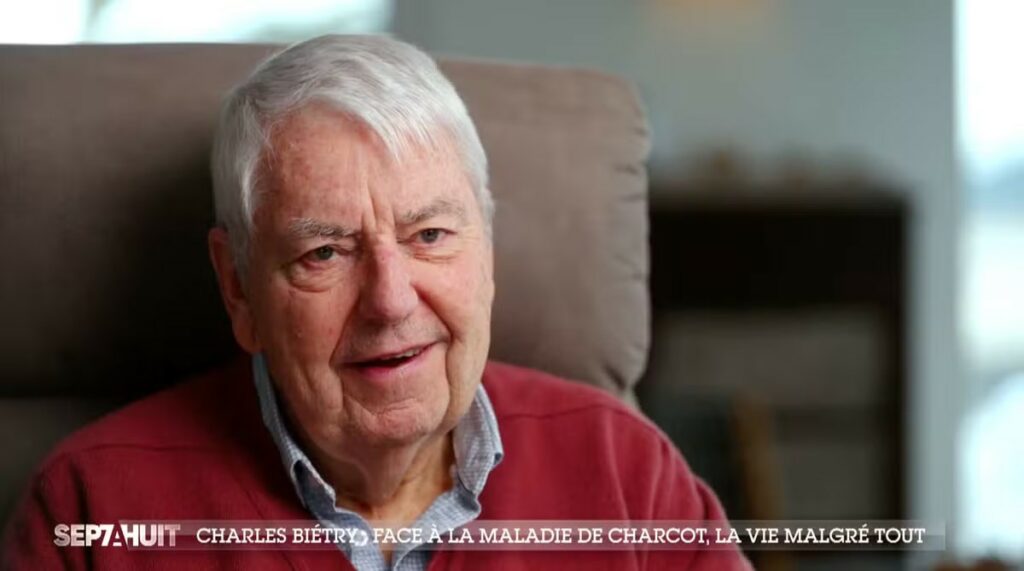
using an AI-generated reconstruction of his voice.
Voice cloning in marketing and customer experience
Brands are also embracing voice cloning to create more engaging interactions. Thanks to embodied voice assistants, they can make their identity speak with a unique voice. Audio ads become ultra-targeted, tailored to each customer profile. And personalized voice storytelling creates a real relationship, more intimate and memorable.
Cloned voice becomes a lever for differentiation and loyalty on a massive scale.

A revolution for audio-first brands
Voice cloning ushers in a new era for audio-first brands: a single voice, customizable on a massive scale, deployed across all points of contact. No more multiple recordings with actors: a single voice can now carry all messages, from advertising to customer follow-up, with coherence and emotion.
This is precisely what Ekoo stands for: putting the voice back at the heart of customer relations. Thanks to customized audio capsules, brands can already express themselves with authenticity. Tomorrow, they'll be able to go even further by choosing their own voice identity, which can be applied to their sites, kiosks, assistants or audio campaigns.
In a saturated world, voice becomes a strong reference point, a lever for differentiation, proximity and loyalty.
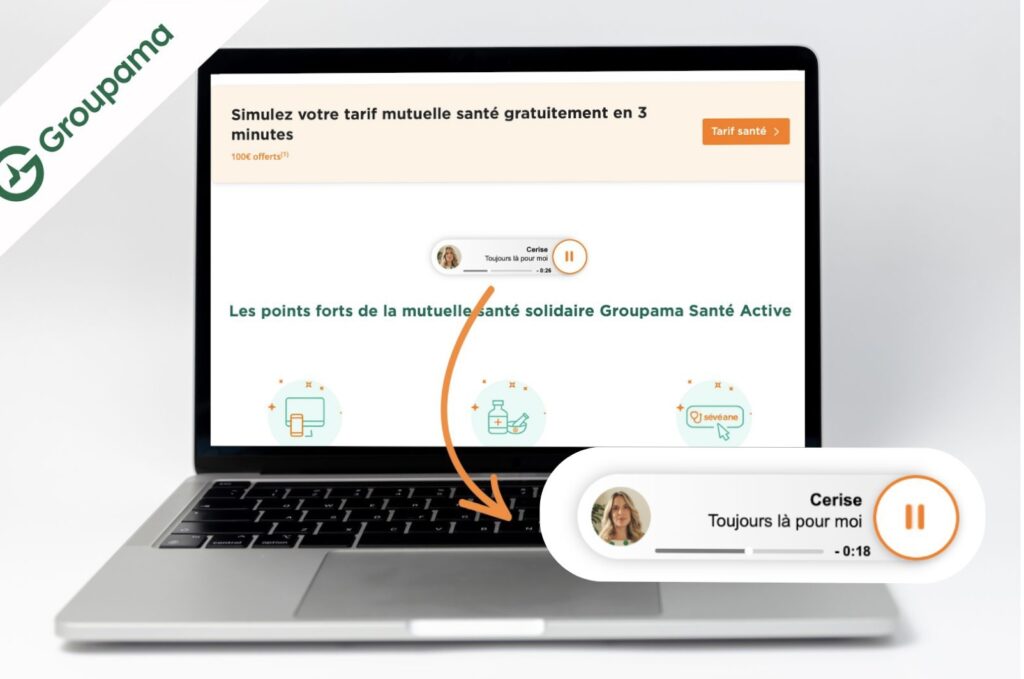
EKOO: an ethical and personalized approach to voice cloning
At EKOO, we're exploring voice cloning as a tool for expressing identity, in a secure and respectful environment. This technology enables us to go even further in personalizing the audio experiences we design with our customers.
Two concrete examples:
- For Aésio Mutuellewe cloned the voice of a real healthcare professional to raise public awareness of the signs of sleep apnea. The aim was to maintain a consistent, human and reassuring voice throughout the audio journey.
- For Méerta gourmet institution in the North of France, we used a computer-generated voice to narrate thestory of their iconic waffle. A modern, fluid way of bringing their brand universe to life, without the need for human recording.
Conclusion: Voice cloning: a technology to be closely monitored
Voice cloning is emerging as a major innovation in the world of audio. Indeed, 84% of people under the age of 25 listen to at least one piece of audio content every day.
So, by transforming the way brands, designers and users interact through voice, voice cloning paves the way for more personalized, more human experiences... and more powerful ones.
That's why at Ekoo, we believe that audio is a medium of emotion and connection. Intelligently integrating voice cloning into audio strategies will enable us to express a strong identity, without losing authenticity. The challenge now is to innovate, without ever forgetting trust.
Interested in voice cloning and its impact on your strategy? Find out how Ekoo can help you take advantage of this innovation.