

In a world saturated with images and text, voice storytelling is making a strong comeback. Podcasts, voice assistants, audio capsules... audio content is exploding.
According to mediametrie, over 22 million podcasts are listened to or downloaded every month in France.
Brands are banking onaudio marketing to reach their customers in new ways. And it's working. Voice storytelling captures attention, moves and engages.
The human voice creates a strong bond. Where texts remain cold, the voice warms. It reassures. It leaves its mark.
In this article, you will discover :
- What is voice storytelling?
- Why it's transforming customer relations
- Which audio formats to use
- How to integrate it into your content strategy
- Examples of successful audio brands
What is voice storytelling?
A simple, concrete definition
Voice storytelling is the art of telling stories in audio format, which can be short or more narrative.
It relies on the voice. It's an embodied, emotional and direct narrative.
More and more brands are adopting voice storytelling. Why? Because it reinforces authenticity. It creates proximity.

How it differs from classic storytelling
Vocal storytelling favors orality. It touches the intimate. It triggers emotions quickly.
A voice creates a sense of connection, something that text can't do as well.
The listener feels involved. They feel they are being spoken to directly.
Effective formats for voice storytelling
Voice storytelling can be adapted to suit any objective. Here are the most commonly used formats:
- Product capsules: the story of a product told in a few seconds
- Audio testimonials : spontaneity and sincerity guaranteed
- Expert contributions: lend credibility to your message
- FAQ audio: inform with dynamism
- Audio series and podcasts: developing a brand universe
These formats create engagement. They also enhance the user experience.
Why is the voice so touching?

A study by Spotify & Neuro-Insight found that digital audio generates on average +23% engagement compared to traditional radio, +18% compared to social networks, and +14% compared to TV.
The emotional power of sound
The voice transmits immediate emotions. It brings a message to life.
It reassures, rhythms, moves. It's a powerful marketing tool.
Voice storytelling works because it appeals to the emotions. It brings content to life.
Neuroscience and auditory memory
The brain retains what it hears better than what it reads.Audio activates emotional memory.
An audio message stays in your head. It makes a more lasting impression than a read text. In fact, according to Penney, C. G., participants memorized an average of 5.36 words heard versus 4.82 words seen, a significant difference thanks to audio(wikipedia).
Voice storytelling is therefore also an asset for memorization.
Comprehensive study on the effects of audio on our brain - Ekoo
Embodiment makes the brand more human
Voice storytelling humanizes your brand. A voice is a real presence.
It embodies your values. It gives soul to your content.
It's this human warmth that makes all the difference.

The benefits of voice storytelling for your brand
Get closer to your customers
Voice storytelling encourages more direct, more human communication.
It breaks with cold, impersonal exchanges. It gives your brand a voice.
You stand out. You connect. In fact, according to Adobe for business, 71% of respondents believe that a natural voice enhances the user experience and strengthens brand engagement.
Develop your in-house talent
Put your employees in the spotlight withaudio. Give them a voice.
It's a great way to showcase your expertise. And tell your story from the inside.
Voice storytelling is also a tool for internal cohesion.
Boost your digital performance
Audio storytelling has a measurable impact, especially with some of our case studies, such as Damart. Thanks to our solution, they measure :
- + time spent on the pages, 89% of their site's users listen to the audio capsules in their entirety.
In general, our customers use our audio solution to measure :
- + customer reinsurance
- + 200% conversion rate
Voice storytelling has a positive influence on the entire user experience.

Examples of successful voice storytelling
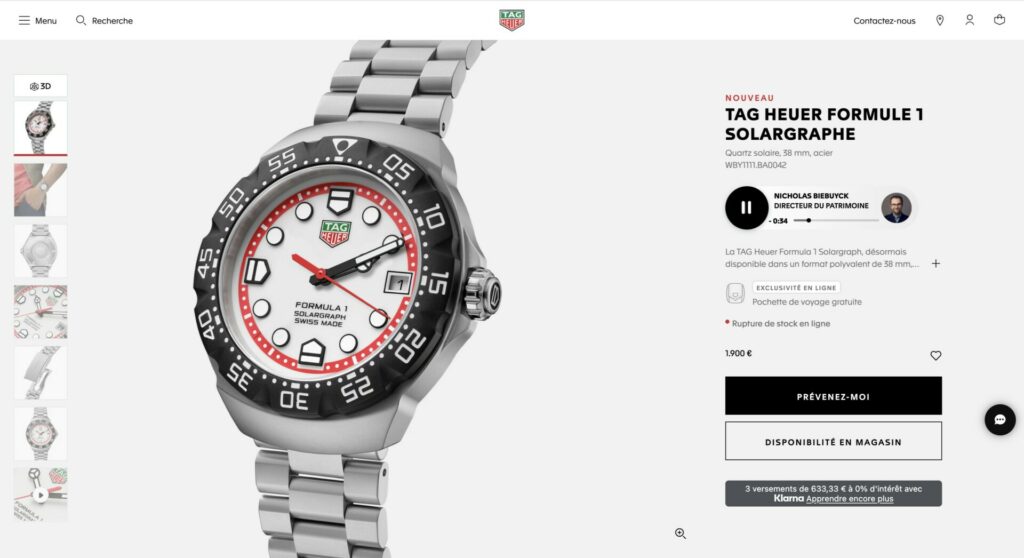
- TAG Heuer - A voice for every watch
Format: Audio capsules integrated into product data sheets
Concept: To enrich the online experience, TAG Heuer has added EKOO audio capsules to several watch models. Each capsule presents the product with clarity and elegance, telling the story of what makes it unique.
Why it works:
The sober, embodied voice is discreetly integrated into the product sheet. It helps customers better understand the world of the watch, while reinforcing the brand's high-end image.
2. Dior - Dior Talks
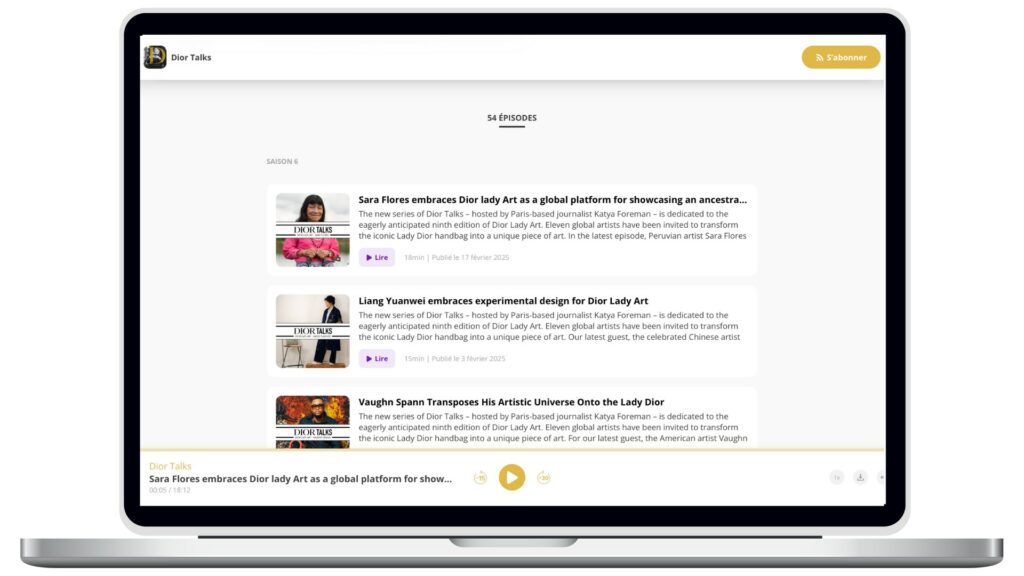
Format: Podcast of interviews and artistic reflections
Concept : A series of interviews with artists, feminists and fashion figures who revolve around the Dior universe.
Why it works: Creators are given a voice, which feeds the intellectual and committed aura of the company. The voice becomes a tool for transmitting values.
👉 Listen
3. Monabanq - Recruitment campaign
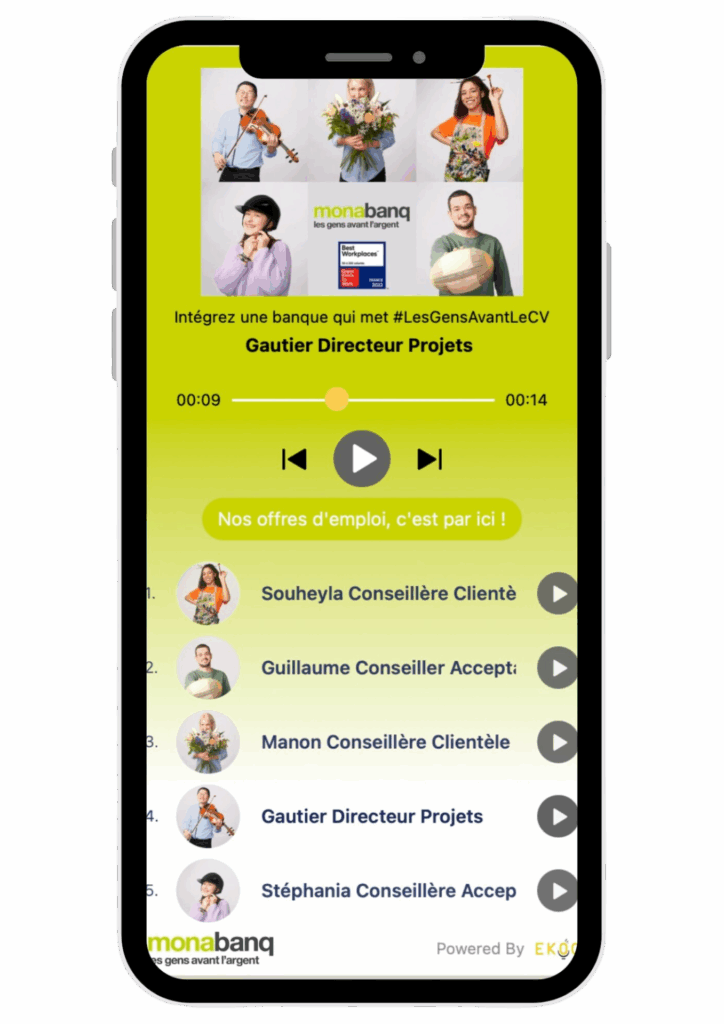
Format: Audio capsules, testimonials
Concept: QR codes were integrated into recruitment posters, allowing users to listen to authentic audio testimonials from employees. This initiative, deployed on public displays, made the campaign more personal and engaging by giving employees a direct voice.
The aim is to show that people come first, and to value their leisure and private lives.
👉 Listen
Why integrate voice storytelling now?
Voice storytelling isn't just a fad: it's a marketing strategy in its own right.
In 2025, the brands that stand out are those that literally speak. By giving your content a voice, you humanize the experience, create engagement and stimulate conversion. It's time to breathe soul into your communications.
How can you integrate voice storytelling into your strategy?
Voice storytelling can't be improvised. For it to have an impact, it must be part of a genuine content strategy. Here's how to deploy it effectively.
Where to start?
Before launching an audio series or capsules, ask yourself the right questions:
- What content is the most relevant to vocalize? Flagship products, brand universe, differentiating values...
- Which voice should embody your brand? Soft, reassuring, dynamic, young... Voice storytelling requires good casting.
Every voice tells a story. It has to be consistent with your brand identity. Sometimes, it will be an internal voice (employee). Other times, an embodied professional voice.
The most important thing is that the voice is credible, memorable and in tune with your messages.

Do you need a dedicated platform or tool?
Voice storytelling can be done by hand. But to take it a step further, a dedicated solution offers real advantages:
- Simple hosting and distribution
- Direct integration on your web or e-commerce pages
- Smooth mobile reading
- Detailed listening statistics
Platforms such as EKOO allow brands to easily create, manage and measure their audio content. The tool remains discreet, integrated and at the service of the user experience.
The goal is not to create a podcast for the sake of creating a podcast, but to add voice where it has the most impact: at the heart of the customer journey.
Measuring impact: which KPIs to track?
Like all marketing levers, voice storytelling needs to be measured. Here are the key indicators:
- Number of listens: who has listened to your audio content?
- Post-listening click-through rate: does audio incite action?
- Conversion rate: does it have an impact on sales?
- Time spent on page: does audio hold attention?
You can also analyze qualitative feedback. Customer feedback often reveals the emotional effect of the voice.
Audio may seem intangible. Yet its effects are tangible and measurable.
Conclusion: Voice, back to basics... and back to impact

Voice storytelling puts people back at the heart of marketing. It combines emotion, performance and differentiation.
The voice touches. It moves. It creates a bond. Above all, it transforms simple information into an experience.
How about giving your products a voice?